- Daniel Nemenyi's newsletter
- Posts
- Cybernetics after Whitehead (Bifurcation Operation: Forking Modernity)
Cybernetics after Whitehead (Bifurcation Operation: Forking Modernity)
My paper at the Bifurcation Operation: Forking Modernity workshop

Daniel Nemenyi
November 18, 2025
Dear friends,
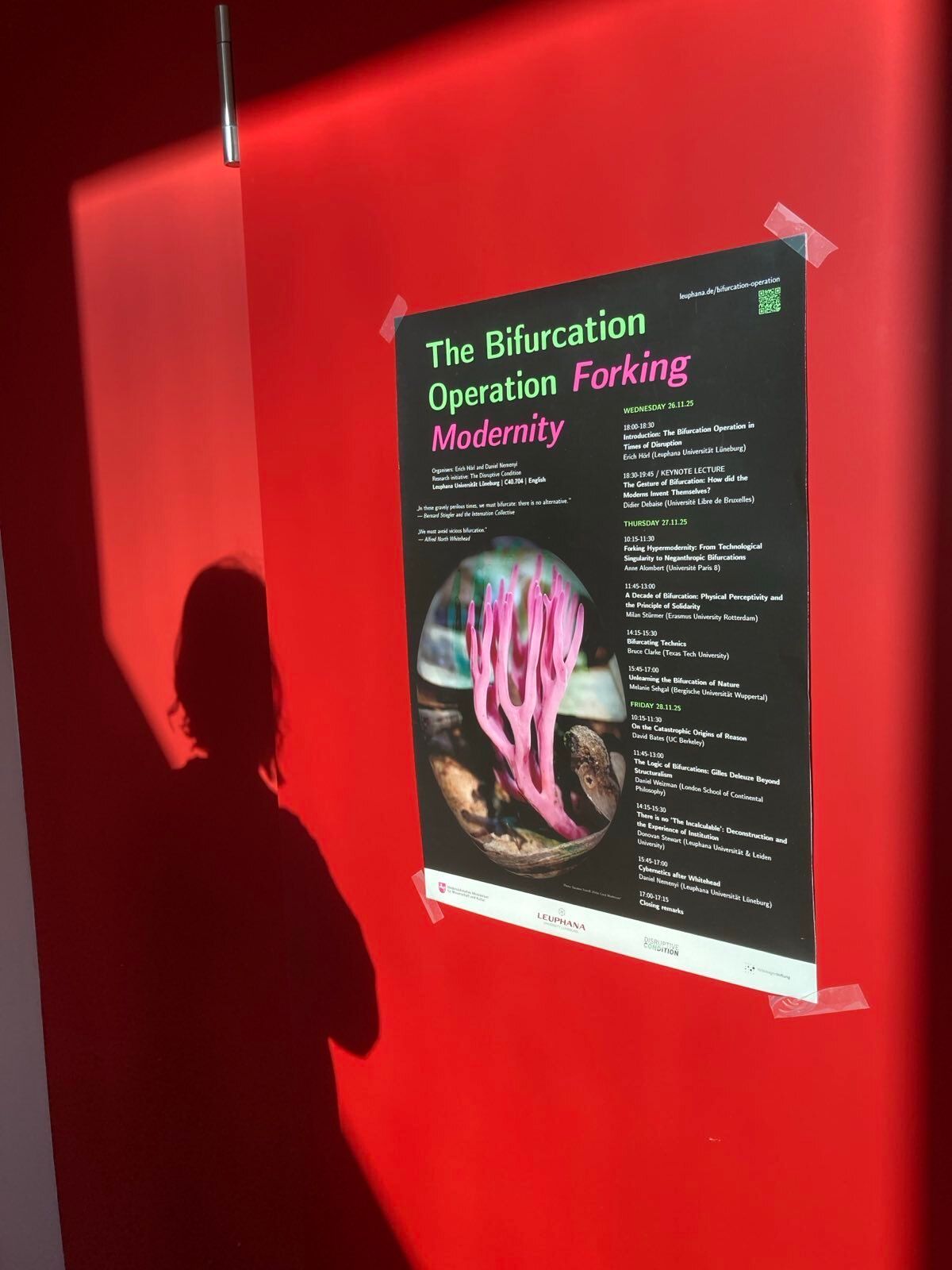
Just a heads up that next Friday I’ll be giving a paper called ‘Cybernetics after Whitehead’. It’ll be at the workshop The Bifurcation Operation: Forking Modernity, which takes place here at Leuphana University Lüneburg next Wednesday to Friday (26.-28.11.25), and which I’ve been organising together with Erich Hörl for the past year and a half.
I must say Erich and I are quite thrilled at the speakers and attendees who’ve agreed to attend. There’ll be Didier Debaise presenting the keynote, and then we’ll have papers by Anne Alombert, Donovan Stewart, Milan Stürmer, Melanie Sehgal, Daniel Weizman, as well as David Bates and Bruno Clarke travelling in all the way from the far reaches of the USA. See the programme for the workshop brief as well as everyone’s abstracts and bios.
The Bifurcation Operation revolves around the concept of bifurcation in the works of the philosophers Alfred North Whitehead, Isabelle Stengers and Bernard Stiegler. Should we be imagining change in today’s algorithmic societies as “bifurcations” which resist predictability? How can we moderns resist the “bifurcation” of reality into an abstract and insensible mode of reality which is superior to aa secondary mode available to the senses? Are there ways of thinking these two traditions together?
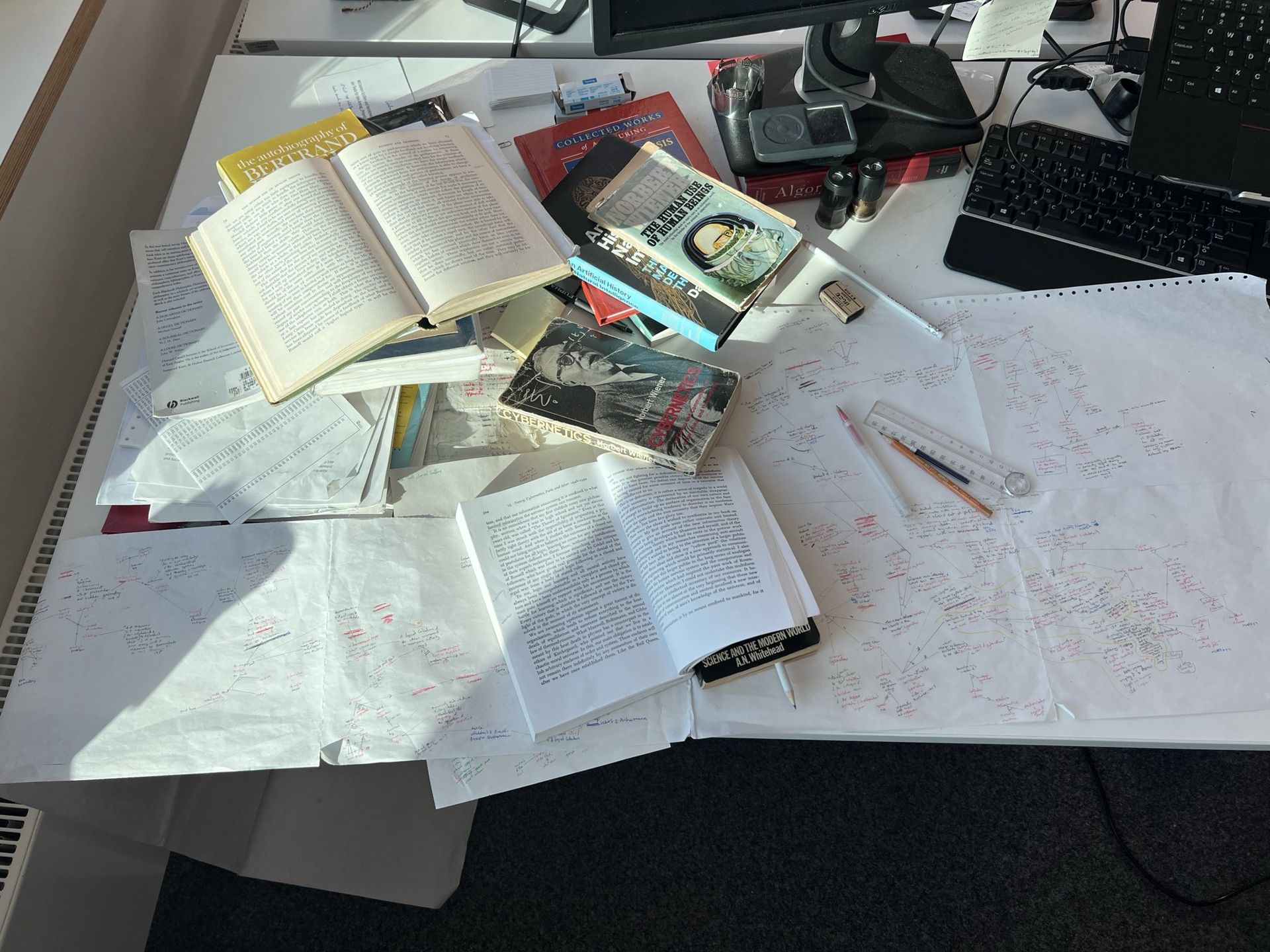
It works for me OK?
My paper will give a reading of the cybernetics which founds our algorithmic societies as in a way bifurcated, in terms of its history, by the early and later work of Whitehead. That of his pre-WWI collaboration with Bertrand Russell on a mathematical/symbolic logic, which was a milestone in the development of computer languages and neural network programming, and of the decade to follow in which Whitehead lays out his process philosophy on the basis of a critique of the “vicious bifurcation of nature“, which I argue was actually more important for the particular cybernetics of Norbert Wiener. The first story is well known and the basis for much of the critique of cybernetics (eg Heidegger), the latter has yet to be scratched. I think reading things in this light can help with thinking our cybernetic age in a different light.
Spaces are still free for the Bifurcation Operation: Forking Modernity if anyone wants to join. Just send me an email to reserve a place.
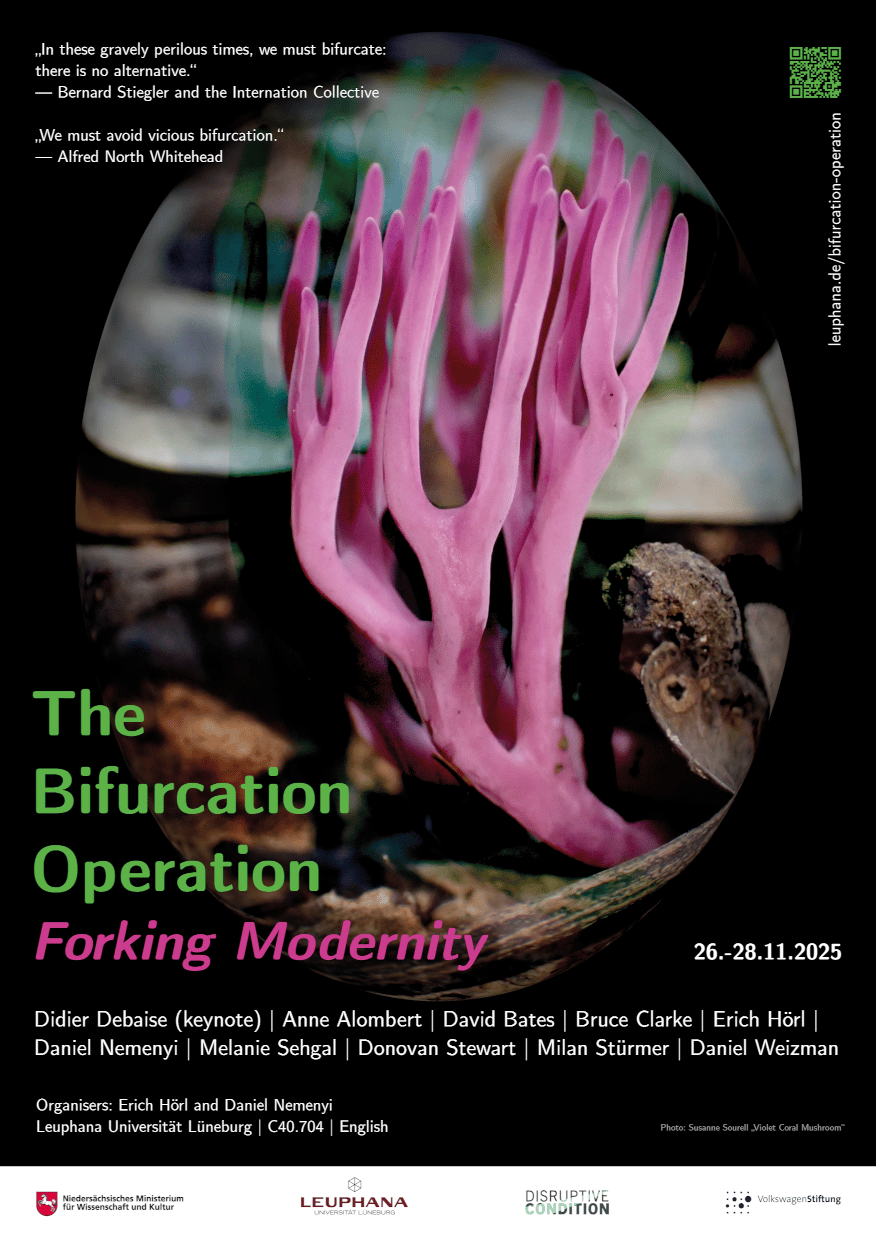
And then after the workshop I’ll be packing my things and moving back to the UK, sad to leave lovely Lüneburg but looking forward to the next chapter.
Yours - in paths forking,
Daniel
Oh and I’ve got a bit of a gap in my employment so if anyone knows of anything interesting going in the UK (or from it), whether postdocs, teaching, copy-editing, coding, graphic design (I made these posters!) or whatnot, then I’d love to hear more.
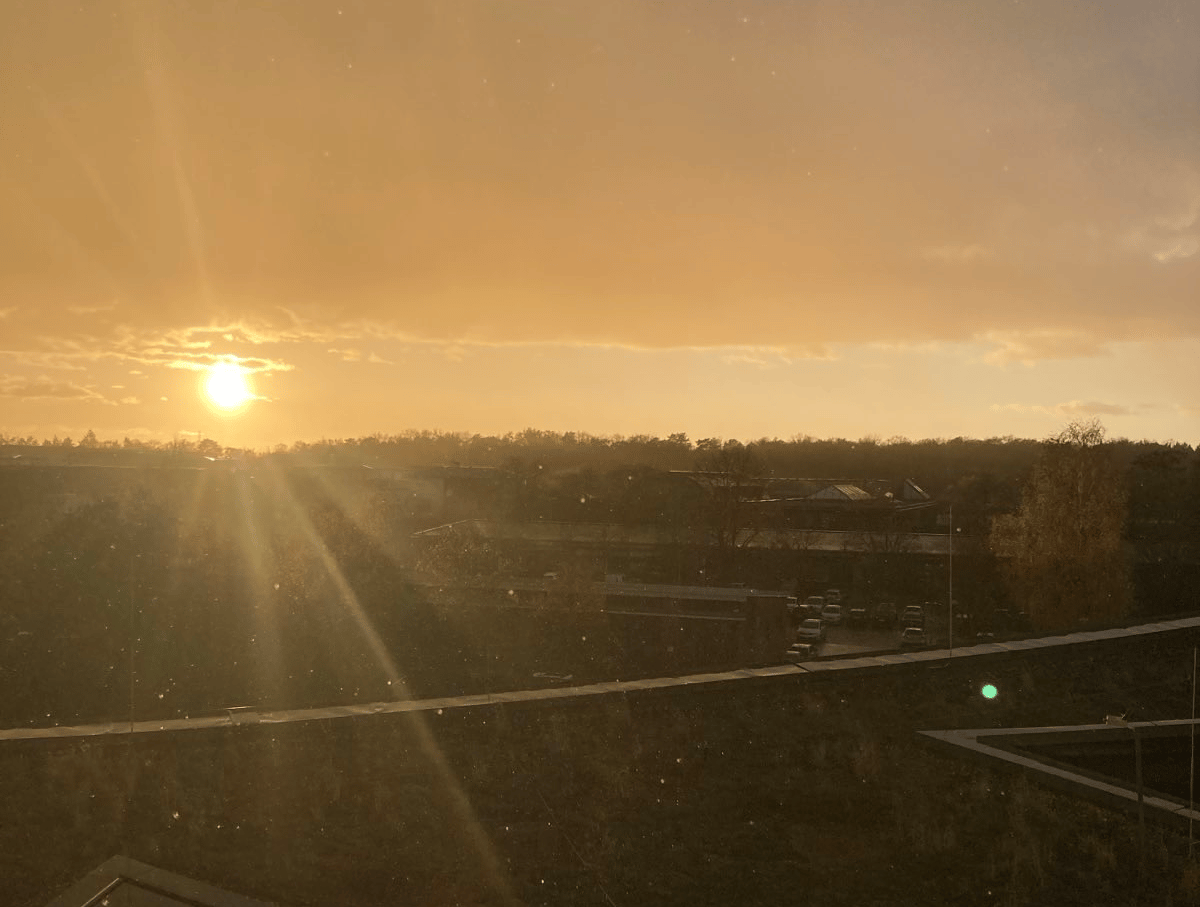
Goodbye Leuphana 👋 (Photo: Inga Luchs)